
Building internal tools is becoming more practical for ecommerce brands. AI agents are making it easier for founders to turn everyday operating problems into working software. What used to require a full engineering team can now start with a clear workflow, a simple prompt, and a tool like Replit or Retool.
Internal tools are software built for employees, not for customers. They support the work happening behind the scenes, including inventory dashboards, reorder systems, reporting panels, approval flows, and order management apps. The goal is simple: give teams clearer data, better visibility, and faster decisions.
For many ecommerce brands, that operational layer is spread across too many places. Orders may live in one platform. Supplier details may sit in another. Inventory notes may be tracked in spreadsheets. Purchasing decisions often happen with incomplete information. As the brand grows, that friction grows with it.
That is why more founders are paying attention to AI-assisted software development. Instead of waiting for a SaaS company to release a missing feature, brands can start shaping tools around how they already work.
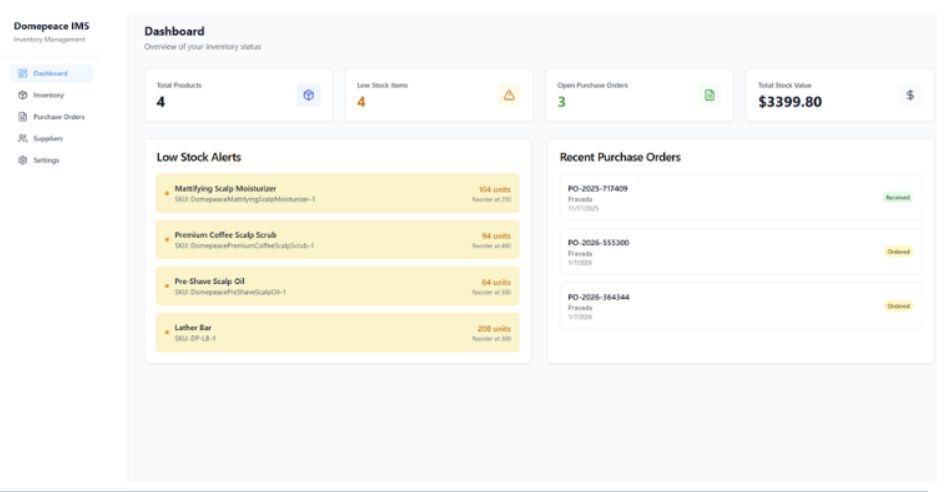
Domepeace is one example. The company used AI-assisted development in Replit to build an inventory management system from scratch. The tool tracks stock levels, displays low-inventory alerts, manages purchase orders, stores supplier records, and calculates average daily sales. It gives the team a clear view of what is happening and helps catch problems before they become expensive.
This shift matters because the people closest to the work can now help shape the software. Founders and operators can define the problem, test the workflow, and improve the tool as they go. That makes internal software more useful because it is built around real business needs.
Why founders are building internal tools instead of buying more SaaS
Many founders start with SaaS because it is fast and easy to set up. That works for a while. As the business grows, the software stack usually grows too. One tool handles email. Another handles inventory. Another handles reporting. Another handles purchasing. Over time, the team ends up using too many systems just to keep daily operations moving.
This creates two problems. Monthly software costs keep rising. The tools also may not fit the way the company actually works. Many SaaS platforms are built for broad use, so they often come with many basic features while still missing the workflow details that matter most to a growing brand.
That is why more founders are paying attention to internal tools. As operations get more complex, workflows become more specific. Teams want polished tools that align with how work gets done in the company.
When off-the-shelf software starts creating drag
The drag usually shows up in small ways at first. Teams export spreadsheets to fill gaps. They make manual updates because systems do not connect well. The same data gets entered more than once. People jump between tabs and platforms throughout the day. That slows work down and raises the chance of human error.
It also makes visibility harder. One department may have part of the picture while another team has the rest. When information is spread out, small issues can sit unnoticed until they become expensive problems.
Why custom tools can fit better
Custom internal tools can more clearly support a specific process. They can pull data from multiple sources and bring it into one place. That cuts down on manual work and gives the team a single source of truth.
With a clearer workflow, teams can move faster and make better decisions. Founders get tools that reflect the real needs of the business, and the team gets a cleaner way to operate.
The Domepeace example: building an inventory app in Replit
Domepeace ran into a problem many ecommerce brands know well. Inventory data was available, but it was not easy to see in one clean view. Stock levels lived in Shopify. Supplier details had to be checked separately. Reorder timing took extra thought. Packaging costs and margin visibility were harder to track in one place. That made planning slower than it needed to be.
The team needed a tool that could track the details that actually drive inventory decisions. That included SKU inventory levels, reorder points, supplier lead times, packaging costs, days of inventory left, and margin visibility. Those are the numbers that help a brand decide what needs attention now and what can wait.
A generic SaaS tool was not the right fit for this use case. Domepeace needed a narrower tool built around its own workflow. The goal was not to buy a larger platform with more features. The goal was to create a clearer operational view for the team.
That is why Replit made sense. It gave Domepeace a way to build quickly, test ideas fast, and shape the app around real business needs.
What problem did the app solve?
The main issue was visibility. There was no single place to see inventory operations clearly. That led to more manual checking and made planning harder. The team needed a better way to stay ahead of low stock levels, track purchase orders, and make faster decisions on purchasing and stock management.
The app solved that by bringing key information into one system. It tracks stock levels, flags low inventory, manages purchase orders, stores supplier records, and calculates average daily sales. That gives the team a stronger view of what is happening and helps catch problems earlier.
Why Replit worked for this use case
Replit worked well because it made iteration faster. The team could test changes, adjust the workflow, and improve the app without a long development cycle. AI-assisted development also helped move the build forward faster.
That matters for founder-led teams. A non-technical founder may not write software like an engineer, but they can still think clearly about the workflow, the pain points, and the outputs the business needs. Replit made it easier to turn that operational understanding into a working internal tool.
The future of ecommerce operations may be founder-built software
A clear shift is starting to take shape in ecommerce. More founders are using AI tools to build software for the parts of the business that need a closer fit. This is becoming a practical way to solve real operating problems inside growing brands.
This does not mean SaaS is going away. Ecommerce brands will still use strong software for payments, email, shipping, and other core functions. The change is happening in the operational layer. Founders are building tools for the workflows that are too specific, too messy, or too important to leave to generic platforms.
Domepeace is one example of that shift. The company used Replit to build an internal inventory app around its own workflow. That gave the team a clearer view of stock, purchasing, supplier data, and planning. The app matched the way the business actually runs, which made it more useful day to day.
That is why this trend matters. Companies with unique workflows can move faster when they build tools around their real needs. AI is making that easier. Founders no longer have to wait as long for a SaaS vendor to solve a narrow problem that may never be a priority on a public roadmap. They can start shaping useful software much closer to the work itself.