How To Use AI To Support Your Design Process

If you’re making an attempt to determine easy methods to use AI for graphic design with out wrecking your inventive course of, you’re asking the best query.
That is about eradicating friction, not changing designers. AI instruments now dwell inside Figma, Adobe, and most product workflows. They generate layouts, draft UX copy, counsel elements, and summarize analysis in seconds. Groups that ignore this shift don’t keep sharp—they fall behind.
The chance is acceleration, not simply automation. Used accurately, AI helps you discover extra concepts, check quicker, and scale design systems with out burning out your group. Used poorly, it creates generic work and weakens your model.
Key Takeaways
- AI works greatest as a velocity multiplier inside analysis, ideation, and iteration, not as a last decision-maker.
- Designers who use AI strategically discover extra ideas in much less time with out sacrificing high quality.
- AI excels at sample recognition and scale; people lead model, emotion, and strategic path.
- Workflow integration issues greater than device choice. Begin with clear constraints and evaluate checkpoints.
- The way forward for design is human-led, AI-supported collaboration the place judgment and curation grow to be aggressive benefits.
Why AI Is Reshaping The AI Design Course of
AI in design moved quick. Just a few years in the past, instruments generated tough visible experiments that designers used for inspiration. Now AI sits inside manufacturing software program as an built-in characteristic. Adobe Firefly brings generative fill straight into Inventive Cloud. Figma AI assists with structure technology and content material drafting inside dwell design information, not separate purposes.
This mirrors broader workforce traits. Current analysis estimates that generative AI might automate 60 to 70 p.c of workers’ time spent on duties like writing, coding, and content material creation. That quantity issues for designers as a result of the instruments have reached manufacturing high quality.
AI now handles producing structure variations immediately, scaling design methods throughout a number of pages, drafting placeholder UX copy, summarizing consumer interviews, and creating picture property. The shift is about integration into each day workflows, not novelty anymore.
AI turns into a velocity multiplier that lets designers iterate quicker, a sample recognizer that surfaces insights people would possibly miss in giant datasets, and a scale enabler that makes it sensible to check dozens of variations as an alternative of three. Designers who ignore these capabilities don’t grow to be extra authentic. They grow to be slower than opponents who’ve discovered easy methods to direct AI successfully.
The place AI Suits Inside The Design Course of
AI helps almost each section of design. The secret is understanding the place it accelerates pondering and the place it shouldn’t lead.
Analysis & Discovery: AI can summarize consumer interviews and cluster recurring themes in minutes as an alternative of hours. You possibly can feed it transcripts from buyer calls and get structured themes again nearly instantly. These insights grow to be extra highly effective when layered with robust web design principles that drive conversions. AI spots patterns in what customers say—you resolve which patterns really matter to your product technique.
Ideation & Idea Growth: That is the place AI shines for increasing chance reasonably than limiting it. You possibly can generate temper boards, discover visible instructions, and create structure permutations at a tempo that wasn’t lifelike earlier than. Immediate an AI device for 15 totally different homepage hero constructions in minutes, then use your judgment to determine which instructions are price refining. That enlargement of choices helps groups get away of acquainted patterns.
Wireframing & Prototyping: If you’ve questioned how can AI UX design enhance workflows, this section exhibits the sensible affect. AI suggests structure blocks primarily based on content material precedence, drafts microcopy that matches tone, and builds tough element constructions. As a substitute of ranging from a clean canvas, designers refine one thing that’s 60% there. That mentioned, if these wireframes have to scale throughout gadgets, making use of mobile design best practices stays important. AI can suggest construction, but it surely doesn’t validate usability throughout breakpoints with out human evaluate.
Utilizing AI For Quicker Ideation With out Killing Creativity
The most important concern designers have is sameness—that AI makes all the things look generic. That occurs, however solely when designers outsource judgment as an alternative of utilizing AI as a pondering device.
AI outputs replicate the constraints you give them. Weak prompts produce generic work as a result of the AI defaults to widespread patterns it’s seen in coaching knowledge. Clear model path, particular visible references, and well-defined constraints produce usable divergence that respects your model id.
Right here’s a workflow that protects creativity: Begin by defining model guardrails clearly—your coloration palette, typography guidelines, spatial hierarchy, and tone. Then use AI to generate a number of structural variations inside these constraints. Overview the batch to determine directional strengths. Possibly one structure’s grid system works higher than others, or a specific hierarchy feels extra balanced. Lastly, refine manually, bringing your style and model data to shine the path that confirmed essentially the most promise.
AI handles divergence by producing many choices rapidly. People deal with convergence by deciding which possibility greatest serves customers and model objectives. That division of labor is the place inventive benefit comes from now—not from producing uncooked property, however from curating intelligently and understanding what makes one structure stronger than one other.
AI Design Instruments Price Exploring
Reasonably than chasing a selected model to start out along with your device search, give attention to classes that clear up actual workflow issues.
Generative Picture Instruments: Adobe Firefly integrates into Inventive Cloud for generative fill, background creation, and texture technology. Midjourney helps fast conceptual exploration when it’s essential visualize summary concepts rapidly. Each have strengths—Firefly for manufacturing polish, Midjourney for conceptual divergence.
Format Assistants Inside Platforms: Figma AI analyzes content material blocks and suggests structural placement patterns primarily based on design rules. That’s typically what individuals imply when asking how does AI web design work in practice—the device reads your content material, understands hierarchy wants, and proposes layouts that respect proximity and visible weight. That saves time, however you continue to have to guarantee these layouts adapt correctly throughout breakpoints. AI suggests construction; it doesn’t validate responsive conduct mechanically.
UX Writing AI: Instruments like ChatGPT assist draft onboarding flows, empty states, error messages, and product explanations. You present context about your product and tone, and the AI generates choices that you simply refine. That is particularly helpful for non-writers on small groups who want practical copy rapidly.
Design System Scaling Instruments: Some instruments assist propagate design tokens throughout information, replace element variants systematically, and preserve consistency as design methods develop. These cut back handbook upkeep overhead that slows groups down.
Analysis Summarization Instruments: AI accelerates theme extraction and clustering from qualitative analysis. Feed it interview transcripts or survey responses, and it teams related suggestions into themes. You continue to interpret what these themes imply strategically, however the preliminary group occurs quicker.
The place AI Ought to Not Lead The Design Course of
AI lacks context past what you feed it. It doesn’t perceive lived expertise, cultural nuance, or accountability for its outputs. That creates clear boundaries for the place it ought to help however not lead.
Keep away from delegating these selections to AI:
- Model technique that defines who you’re and why you matter
- Emotional storytelling that connects with customers on a human stage
- Cultural nuance that requires consciousness of traditions and sensitivities
- Moral tradeoffs the place design selections have an effect on weak customers
- Accessibility selections that decide whether or not individuals with disabilities can use your product
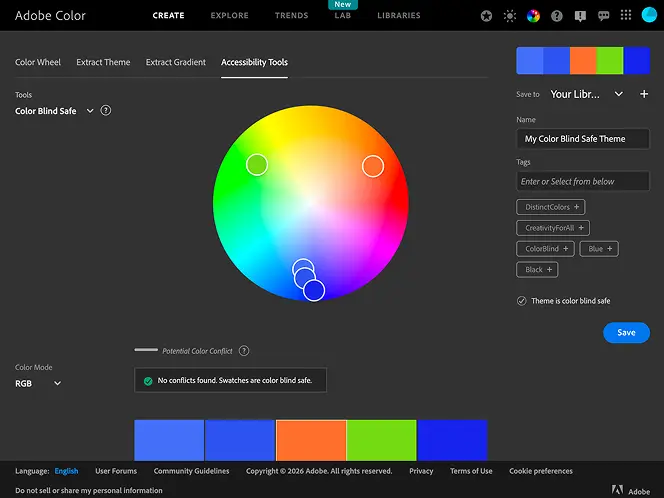
Accessibility is an excellent instance of why AI wants human oversight. AI can flag distinction ratios, verify coloration blindness simulations, and counsel alt textual content. However designing actually inclusive methods calls for empathy, consumer testing with individuals who have disabilities, and deep data of WCAG compliance. AI can help; it can not outline inclusive technique or make judgment calls about complicated accessibility tradeoffs.
The identical applies to model technique. AI can generate tagline choices or counsel positioning statements, but it surely can not perceive your organization’s mission, aggressive differentiation, or long-term imaginative and prescient with out you offering that context—and even then, it can not make strategic selections about the place to compete or what to face for.
Constructing An AI-Supported Inventive Workflow
Instruments create velocity, however methods create leverage. The distinction issues as a result of ad-hoc AI utilization creates inconsistency, whereas structured workflows compound worth over time.
Begin by defining when AI enters your course of. Use it early for analysis synthesis, preliminary ideation, and variant technology. Keep away from inserting it into last model approvals or strategic displays with out clear human oversight. Create shared immediate libraries so your group develops constant constraints that produce robust outputs. When somebody writes a immediate that generates glorious outcomes, put it aside. That institutional data turns into precious as your group scales.
Add evaluate checkpoints the place each AI-assisted asset passes human critique earlier than approval. This prevents generic work from slipping by. Somebody with design judgment wants to guage whether or not the AI output serves the temporary, matches model requirements, and solves the consumer drawback successfully.
For small groups, this would possibly imply a easy guidelines: “AI-generated property reviewed for model alignment, consumer readability, and accessibility concerns.” For enterprise groups, doc AI-assisted selections for transparency, danger administration, and consistency. Deal with AI like a junior collaborator—quick, productive, able to dealing with repetitive duties, however requiring clear path and high quality evaluate.
Frequent Errors When Including AI To Your Design Course of
Groups make predictable errors when integrating AI. Probably the most widespread is accepting first outputs with out iteration. AI drafts are beginning factors, not completed work. A structure generated in 30 seconds in all probability wants half-hour of refinement to match your model and serve customers properly.
One other mistake is skipping consumer validation. AI can generate lovely interfaces that confuse actual customers. At all times check AI-assisted designs with precise individuals earlier than delivery.
Treating AI drafts as last property creates bland work. AI averages patterns from coaching knowledge, which suggests outputs pattern towards the center. Your job is pushing previous that common towards one thing distinctive.
Letting model consistency drift occurs when totally different group members use AI with totally different constraints. With out shared tips, your visible id fragments throughout initiatives.
Ignoring mental property implications creates danger. Some AI-generated content material could resemble copyrighted work from coaching knowledge. Overview outputs fastidiously and modify them sufficient that they’re clearly authentic.
The repair for all of those is easy: use AI to discover choices, validate with actual customers, and refine manually earlier than contemplating something carried out.
The Future of AI in Design: Augmentation, Not Substitute
Inventive roles are evolving reasonably than disappearing. As automation expands, human-centered abilities—judgment, style, strategic pondering, empathy—improve in worth reasonably than lower.
Designers who thrive gained’t resist AI instruments or fake they don’t exist. They’ll orchestrate AI successfully by directing it towards high-leverage duties, setting robust constraints, and curating outputs intelligently. The aggressive benefit shifts towards path (understanding what to ask for), judgment (recognizing high quality), and system-level pondering (constructing workflows that scale).
Quicker iteration cycles grow to be regular. Groups that used to check three homepage variations now check thirty. That quantity requires higher curation abilities, understanding which indicators point out a powerful idea versus a mediocre one. Blended human-machine creativity turns into customary, the place people present strategic path and style whereas AI handles velocity and scale.
The designers who battle shall be those that resist integration or, conversely, over-rely on AI with out creating their very own judgment. Those who win will use AI to broaden what’s attainable whereas retaining human creativity and empathy on the middle.
FAQs
Is AI going to take over the graphic design trade?
AI automates production-heavy duties like resizing property, producing variations, and creating placeholder content material, but it surely can’t change strategic pondering, model management, or inventive interpretation. Jobs evolve—designers spend much less time on repetitive duties and extra time on technique and artistic path.
Will AI change graphic designers?
Design roles are altering whereas the occupation itself stays robust. Designers who combine AI successfully broaden their capability and iteration velocity. The abilities that grow to be extra precious are judgment, curation, model technique, and consumer empathy—issues AI can not replicate.
What are the advantages of AI net design?
AI accelerates structure technology, UX copy drafting, and behavioral evaluation. It reduces bottlenecks that gradual groups down and will increase the variety of experiments you’ll be able to run. Which means quicker studying cycles and better-informed design selections.
{
“@context”: “https://schema.org”,
“@kind”: “FAQPage”,
“mainEntity”: [
{
“@type”: “Question”,
“name”: “Is AI going to take over the graphic design industry? “,
“acceptedAnswer”: {
“@type”: “Answer”,
“text”: “
AI automates production-heavy tasks like resizing assets, generating variations, and creating placeholder content, but it can’t replace strategic thinking, brand leadership, or creative interpretation. Jobs evolve—designers spend less time on repetitive tasks and more time on strategy and creative direction.
”
}
}
, {
“@type”: “Question”,
“name”: “Will AI replace graphic designers? “,
“acceptedAnswer”: {
“@type”: “Answer”,
“text”: “
Design roles are changing while the profession itself remains strong. Designers who integrate AI effectively expand their capacity and iteration speed. The skills that become more valuable are judgment, curation, brand strategy, and user empathy—things AI cannot replicate.
”
}
}
, {
“@type”: “Question”,
“name”: “What are the benefits of AI web design?”,
“acceptedAnswer”: {
“@type”: “Answer”,
“text”: “
AI accelerates layout generation, UX copy drafting, and behavioral analysis. It reduces bottlenecks that slow teams down and increases the number of experiments you can run. That means faster learning cycles and better-informed design decisions.
”
}
}
]
}
Conclusion
AI is a multiplier that amplifies your capabilities reasonably than a mastermind that makes selections. If you’re determining easy methods to use AI for graphic design, begin small and particular. Use it in analysis synthesis to avoid wasting hours of handbook theme clustering. Use it in early ideation to generate more options than you’d create manually. Measure the place it reduces friction with out hurting readability or model power.
Then construct construction round what works—shared prompts, evaluate checkpoints, clear documentation of AI-assisted outputs.
Sturdy design nonetheless will depend on human judgment and strategic path. AI simply will increase the variety of knowledgeable experiments you’ll be able to run.
The designers who win gained’t resist AI. They’ll direct it intelligently whereas retaining human creativity and judgment on the middle of each determination.