How Voice Search Ads Are Changing The Search Term Report in 2026

If you’ve checked out a Google Advertisements Search Time period Report (STR) recently, you already know it looks like stepping off a merry-go-round just a little too quick. The tidy lists of “finest trainers” or “mortgage charges NYC” that we constructed whole careers round? These are fading out. Now, it’s a wall of textual content that appears like somebody rambling into their cellphone whereas driving. You see stuff like: “Hey, discover me that blue sneaker model I noticed on TikTok, the one with the additional arch help as a result of my left foot has been killing me recently.”
This text explores the basic shift from syntax to semantics. We’re shifting past easy key phrase matching and into the period of Pure Language Processing, the place the size, tone and even the phonic urgency of a spoken question dictate your advert spend.
Welcome to 2026. Voice search isn’t simply larger, it’s fully reworked the STR right into a chaotic transcript of individuals considering out loud. For these of us working inside businesses, this isn’t just a few formatting headache; it’s an actual change in how we monitor intent, defend budgets, and, actually, simply cease losing our shoppers’ cash.
1. The “Conversational Bloat” of 2026 in Google Voice Search Advertisements
Bear in mind again in 2022? Search queries averaged about 2.8 phrases. Now? 9. Typically ten. Due to Gemini Stay, the brand new Siri LLM, and everybody chatting with sensible glasses, search queries have gotten long-winded. This messes together with your account in two methods:
Intent will get misplaced: If somebody sorts “plumber,” you already know precisely what they need. But when they are saying, “Hey Google, I believe my water heater is making a bizarre clicking sound, ought to I name somebody or simply wait?”—good luck determining what they really need. Intent is buried below a pile of phrases.
The “shut variant” minefield: Google’s shut variant matching is in overdrive. It tries to attach a 15-word spoken question to your easy [Plumber] key phrase. If you’re not cautious, you find yourself paying for clicks from people who find themselves simply musing aloud—not prepared to purchase.
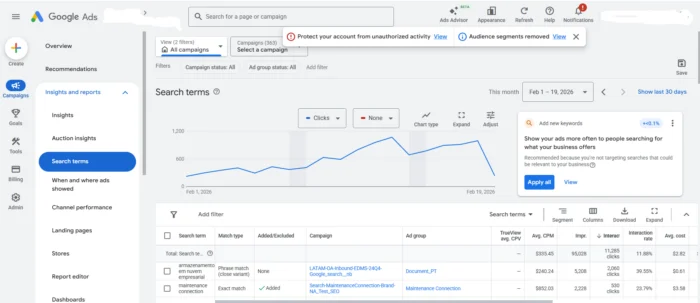
If you’re questioning the way to discover the search time period report in Google Advertisements to examine this your self, head to Insights and Experiences → Search Phrases. Pull knowledge weekly. In a voice-heavy account, this report modifications quick.
2. “Ambient Intent” and the Ghost within the Machine
Right here’s probably the most annoying change: unintended voice triggers. With always-on wearables, the STR is selecting up background noise—random snippets of dialog that aren’t actual searches.
We’re seeing a bounce in what we name Low-Confidence Matches. The AI thinks it heard somebody looking out, but it surely simply caught chatter from a cellphone sitting on a kitchen counter.
What does this imply for you? Time to get severe about your Detrimental Key phrase Scripts. If 40% of your STR is “Hey Google” and “I used to be questioning,” you’re pouring cash down the drain on junk queries. We’ve began blocking “politeness markers” like “please,” “thanks,” and “are you able to.” They’re not unhealthy phrases; they’re simply litter, hiding the actual intent we want.
3. Sentiment is the New “Key phrase”
For the primary time, how folks discuss tells us greater than what they really say. In 2026, we’re sorting STRs by Phonic Urgency.
The “Panic” Question: “Siri, I would like a locksmith NOW, I’m locked out and my oven is on!” (Costly click on, however excessive likelihood they’ll convert.)
The “Boredom” Question: “Hey, what are some cool locations to go on a Saturday if it’s raining?” (Low cost click on, however they bounce quick.)
If you’re bidding the identical quantity for each, simply because they embrace “locations” or “locksmith,” you’re lacking the purpose. We should set up campaigns by “Downside-State” as a substitute of simply “Subject-State.”
Subject State: You bid on the noun. For instance, bidding on “locksmith” no matter why the consumer is looking out.
Downside State: You bid on the state of affairs revealed by the voice transcription. The AI analyzes the phonic urgency and context to decide the extent of instant want.
4. The “Entity” Disaster: Model Names Are Fading
Right here’s a stat to scare your model shoppers: branded search quantity is dropping for mid-sized corporations.
In 2026, folks don’t keep in mind names they keep in mind little particulars. As an alternative of “Allbirds,” they’re telling their AI, “these sustainable wool sneakers you don’t should put on socks with.”
If you happen to work for a model, your STR in all probability exhibits you’re successful auctions for these descriptions, not your precise identify. Groups specializing in SEO for voice search and PPC groups should work hand-in-hand. In case your touchdown web page doesn’t echo the precise language folks use within the STR, your High quality Rating tanks, as a result of Google’s AI received’t see the match.
FAQs
What Are Voice Search Advertisements?
Voice search advertisements are paid search advertisements triggered by spoken queries on gadgets like smartphones, sensible audio system, wearables, and AI assistants.
As an alternative of typing “finest plumber close to me,” customers say one thing like, “Hey Google, who can repair a leaking pipe tonight?”
Google Advertisements treats these spoken queries as search intent. Your advertisements can seem within the outcomes, identical to conventional textual content searches. The distinction? Voice queries are longer, extra conversational, and infrequently extra pressing.
That shift modifications how your key phrases match, how your search time period report appears to be like, and the way you handle negatives.
Are Google Voice Search Advertisements Completely different From Common Search Advertisements?
Technically, no. Google doesn’t have a separate marketing campaign sort labeled “Google voice search advertisements.”
Voice queries merely feed into the identical Google Advertisements system.
The distinction exhibits up within the Search Time period Report. Voice searches are usually:
- Longer
- Extra conversational
- Framed as questions
- Crammed with qualifiers and context
Which means your match sorts, unfavourable key phrases, and bidding methods have to alter—even when your marketing campaign construction stays the identical.
What Is A Search Time period Report In Google Advertisements?
The Search Time period Report (STR) exhibits the precise queries customers typed or spoke earlier than clicking your advert.
Not your key phrases.
The true phrases.
It’s the place you see:
- What triggered your advertisements
- Whether or not the intent matches your provide
- The place you’re losing price range
- The place new alternatives are hiding
In a voice-first world, this report issues greater than ever. It’s not neat two-word phrases. It’s full conversations.
How To Discover The Search Time period Report In Google Advertisements?
Right here’s the way to discover the Search Time period Report in Google Advertisements:
- Log into your Google Advertisements account
- Click on on “Campaigns”
- Choose a selected marketing campaign or advert group
- Click on “Insights and Experiences”
- Select “Search Phrases”
You’ll see the precise queries that triggered your advertisements.
If you’re operating Efficiency Max, you’ll have to examine insights reviews, since full transparency isn’t all the time obtainable.
And with voice search rising, reviewing this report weekly isn’t optionally available anymore.
Do Voice Search Advertisements Convert Higher?
Voice queries typically present increased intent. Somebody saying, “I would like an emergency dentist proper now,” is in a really totally different mindset than somebody typing “dentist.”
However voice site visitors additionally contains exploratory and unintended queries. That’s why filtering your Search Time period Report and tightening negatives is crucial.
Intent issues greater than quantity.
{
“@context”: “https://schema.org”,
“@sort”: “FAQPage”,
“mainEntity”: [
{
“@type”: “Question”,
“name”: “What Are Voice Search Ads? “,
“acceptedAnswer”: {
“@type”: “Answer”,
“text”: “
Voice search ads are paid search ads triggered by spoken queries on devices like smartphones, smart speakers, wearables, and AI assistants.
Instead of typing “best plumber near me,” users say something like, “Hey Google, who can fix a leaking pipe tonight?”
Google Ads treats these spoken queries as search intent. Your ads can appear in the results, just like traditional text searches. The difference? Voice queries are longer, more conversational, and often more urgent.
That shift changes how your keywords match, how your search term report looks, and how you manage negatives.
”
}
}
, {
“@type”: “Question”,
“name”: “Are Google Voice Search Ads Different From Regular Search Ads? “,
“acceptedAnswer”: {
“@type”: “Answer”,
“text”: “
Technically, no. Google doesn’t have a separate campaign type labeled “Google voice search ads.”
Voice queries simply feed into the same Google Ads system.
The difference shows up in the Search Term Report. Voice searches tend to be:
- Longer
- More conversational
- Framed as questions
- Filled with qualifiers and context
That means your match types, negative keywords, and bidding strategies need to adjust—even if your campaign structure stays the same.
”
}
}
, {
“@type”: “Question”,
“name”: “What Is A Search Term Report In Google Ads? “,
“acceptedAnswer”: {
“@type”: “Answer”,
“text”: “
The Search Term Report (STR) shows the actual queries users typed or spoke before clicking your ad.
Not your keywords.
The real phrases.
It’s where you see:
- What triggered your ads
- Whether the intent matches your offer
- Where you’re wasting budget
- Where new opportunities are hiding
In a voice-first world, this report matters more than ever. It’s no longer neat two-word phrases. It’s full conversations.
”
}
}
, {
“@type”: “Question”,
“name”: “How To Find The Search Term Report In Google Ads? “,
“acceptedAnswer”: {
“@type”: “Answer”,
“text”: “
Here’s how to find the Search Term Report in Google Ads:
- Log into your Google Ads account
- Click on “Campaigns”
- Select a specific campaign or ad group
- Click “Insights and Reports”
- Choose “Search Terms”
You’ll see the exact queries that triggered your ads.
If you’re running Performance Max, you’ll need to check insights reports, since full transparency isn’t always available.
And with voice search growing, reviewing this report weekly isn’t optional anymore.
”
}
}
, {
“@type”: “Question”,
“name”: “Do Voice Search Ads Convert Better? “,
“acceptedAnswer”: {
“@type”: “Answer”,
“text”: “
Voice queries often show higher intent. Someone saying, “I need an emergency dentist right now,” is in a very different mindset than someone typing “dentist.”
But voice traffic also includes exploratory and accidental queries. That’s why filtering your Search Term Report and tightening negatives is critical.
Intent matters more than volume.
”
}
}
]
}
The Backside Line: Cease Combating the Dialog
Voice search advertisements aren’t a separate marketing campaign sort, however they’re reshaping how your Google Advertisements search time period report behaves.
The Search Time period Report isn’t damaged. It’s lastly exhibiting us how folks really suppose. We’re not wired for key phrases we predict in issues, half-questions, and frantic requests whereas juggling groceries.
As businesses, we have to give up shoving customers again into some tidy “key phrase field.” Embrace the messiness of the 2026 STR. See it as a direct line into the buyer’s thoughts. If persons are looking out “How do I…”, for the love of ROAS, don’t ship them to a “Purchase Now” web page.
The knowledge’s speaking. The one query is, are you really listening or simply looking for key phrases?