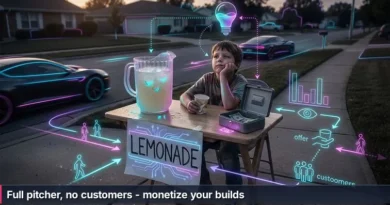
AI won’t kill SaaS, but major shifts are coming


In early February 2026, the discharge of Anthropic’s Claude Cowork triggered a massive selloff within the know-how sector, wiping $285 billion off the market capitalization of main software program shares in a single day. Buyers panicked. The prevailing narrative advised that AI brokers and vibe coding would instantly eradicate the necessity for conventional software program as a service (SaaS).
The market assumed that anybody with an web connection might merely ask a big language mannequin to generate a customized enterprise useful resource planning system or communication platform on the fly. It is a sentiment that has been ebbing and flowing frequently for the reason that launch of ChatGPT.
A better have a look at the very corporations constructing these revolutionary fashions reveals a special actuality. The main synthetic intelligence laboratories nonetheless rely closely on established SaaS merchandise to run their every day operations (each CEOs of OpenAI and Anthropic have been on document saying their group makes use of Slack). They’ve entry to probably the most superior code-generation instruments on the planet, but they proceed to pay for off-the-shelf software program. They do that as a result of enterprise software program includes far more than producing a useful consumer interface.
The quick panic ignored the structural realities of enterprise IT, but it surely did sign a real, everlasting shift within the software program market. SaaS will not be going away, however the dynamics will certainly change, and software program corporations must adapt.
The stress between shopping for pre-packaged software program and constructing customized inner instruments at all times comes right down to basic economics. Traditionally, SaaS offered immense worth as a result of constructing proprietary software program was prohibitively costly.
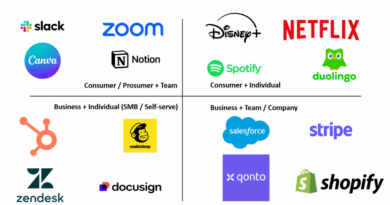
A regular communication platform like Slack or undertaking administration instrument like Notion sometimes prices round $20 per seat each month. An organization with 100 workers spends roughly $24,000 yearly for that single service. Growing, deploying, and sustaining a proprietary different requires hiring a group of devoted builders, securing server structure, and managing steady updates. Within the pre-AI period, the million-dollar price ticket of an in-house construct made the $24,000 SaaS subscription an apparent, unavoidable enterprise expense.
Synthetic intelligence basically adjustments the mathematics behind this calculation. Generative coding instruments drastically scale back the preliminary friction and monetary burden of software program improvement. Business information from AppDirect reveals that vibe-coding and AI-enabled improvement can drive up to a 70% reduction in general improvement prices. This value compression shifts the breakeven level between shopping for and constructing.
Take into account a mid-market group with 300 workers counting on a normal enterprise stack of communication, buyer relationship administration, human sources, and undertaking administration instruments. If the common value throughout these disparate platforms totals $150 per seat every month, the corporate faces an annual software program expenditure of $540,000.
With AI decreasing the barrier to entry, that very same firm can alter its technique. As a substitute of renewing costly vendor contracts, the group can rent two extremely skilled software program engineers to behave as AI orchestrators. Paying these engineers totally loaded salaries totaling $320,000, plus an estimated $60,000 yearly for cloud internet hosting and API token consumption, brings the overall in-house construct value to $380,000. The corporate saves cash whereas gaining totally custom-made, compliant inner instruments. The large revenue margins conventional SaaS corporations have loved for the final decade face extreme downward strain as these options turn into accessible.

Uncle Bob Martin@unclebobmartin
AI agents have vastly changed the build vs buy calculus. The vast majority of tools can be built at virtually no cost.
1:01 PM · Mar 10, 2026 · 32.4K Views
85 Replies · 22 Reposts · 326 Likes
The transition away from normal SaaS won’t occur uniformly throughout the enterprise panorama. Large enterprises possess the capital and infrastructure to deliver software program improvement fully in-house. In the meantime, very small corporations and early-stage startups will doubtless stick to low-cost, off-the-shelf SaaS merchandise as a result of their SaaS prices nonetheless don’t justify constructing and operating their very own software program, and dedicating any inner sources to software program upkeep stays a distraction from their core enterprise.